Volcanoes National Park sits in the northwestern corner of Rwanda, just a 2 to 3 hour drive from Kigali, and ranks as the country’s top tourist destination. The park protects mountain gorillas, golden monkeys, and five volcanic peaks from the Virunga chain, and it’s the only place in Rwanda where you can trek gorillas. This guide covers everything you need to plan a visit, from gorilla permits to mountain hikes to where to stay.
Where Volcanoes National Park Is Located
Volcanoes National Park sits in Rwanda’s Northern Province, near the town of Musanze and the village of Kinigi. A well-maintained tarmac road connects the park to Kigali, making the drive straightforward, and high-end travelers can also fly directly into a nearby airstrip in Kinigi. The park forms part of the wider Virunga Conservation Area, shared with Uganda’s Mgahinga Gorilla National Park and Congo’s Virunga National Park.
Gorilla Trekking in Volcanoes National Park
Gorilla trekking is the main reason travelers come to Volcanoes National Park. The park protects around 12 habituated gorilla families available for trekking, including well-known groups like Susa, Karisimbi, Amahoro, Sabyinyo, Agashya, Umubano, Hirwa, Kwitonda, Ugenda, and Bwenge. Roughly 80 gorilla permits are issued each day, spread across these families. Browse our Rwanda gorilla safari packages to see full itineraries built around this park.
A Rwanda gorilla trekking permit costs $1,500 per person, the same price for local residents, foreign non-residents, and foreign residents. Book your permit through the Rwanda Development Board directly in Kigali, or through a licensed tour operator.
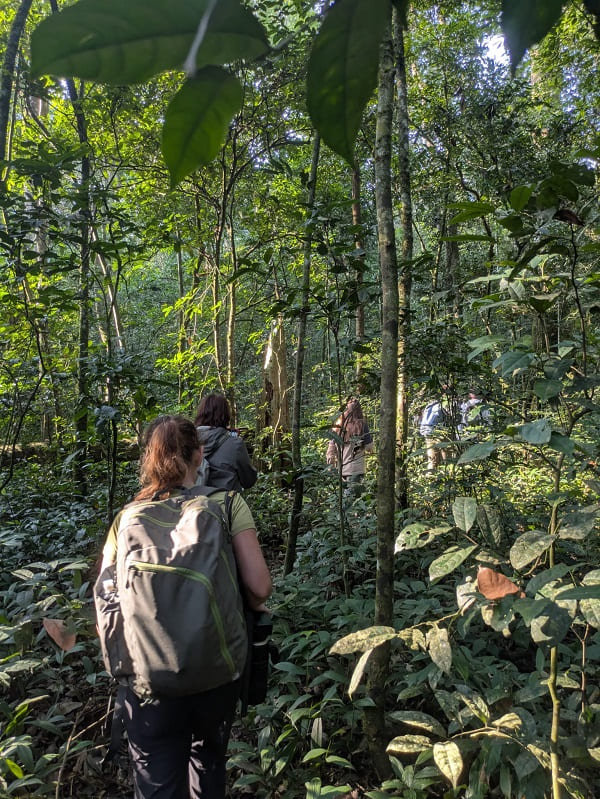
Trek day starts early with a 7:00am briefing at Kinigi park headquarters, where rangers cover the dos and don’ts of trekking. Groups head into the forest around 8:00am, guided by a ranger toward an assigned gorilla family. Only 8 people can trek each family per day, and once you find the gorillas, you get one hour to observe them.
Trekking involves hiking steep forest slopes for 2 to 6 hours depending on where the gorillas are located that day. Trekkers must be at least 15 years old and in good health, since gorillas are vulnerable to human illnesses. Along the way, you’ll likely spot other primates too, including golden monkeys, L’Hoest’s monkeys, olive baboons, vervet monkeys, owl-faced monkeys, and various colobus species.
Golden Monkey Trekking
Golden monkeys live in the bamboo forests on the lower slopes of the Virunga volcanoes, and trekking them makes a popular add-on to a gorilla safari. Their playful behavior and distinctive golden fur make for an engaging, lighter alternative to a full gorilla trek, and permits generally cost less than gorilla permits.
Hiking the Volcanoes: Mount Bisoke
Mount Bisoke is a dormant volcano rising 3,711 meters, shared between Rwanda and Congo, though it can only be climbed from the Rwanda side. At the summit sits a crater lake roughly 400 meters wide and 100 meters deep, formed after the mountain’s last eruption in 1957. The name Bisoke comes from a local word meaning “soaked in water,” a reference to the lakes scattered across its slopes.
Two routes lead up Bisoke. The main route to the summit crater lake takes about 4 hours to climb and 2 hours to descend. A shorter route leads to a smaller lake inside the mountain and takes roughly 2 to 3 hours depending on pace. Both hikes start at 7:00am from Kinigi park headquarters, and porters are available for a small fee if you need help carrying gear.
Along the way, watch for golden monkeys, mountain gorillas, colobus monkeys, vervet monkeys, and baboons, along with larger animals like elephants, duikers, buffaloes, and bushbucks. Bisoke also sits close to the Karisoke Research Institute, founded by primatologist Dian Fossey between Bisoke and Karisimbi. Many hikers combine their trek with a visit to her tomb.
Hiking the Volcanoes: Mount Karisimbi
Mount Karisimbi stands 4,507 meters tall, the highest peak in the Virunga chain and one of the tallest mountains in Africa. Its name comes from a Kinyarwanda word referencing the snow that occasionally covers its summit between June and August. Climbing Karisimbi takes two full days, making it the most demanding hike in the park, and the trek starts from Volcanoes National Park itself.
Hiking the Volcanoes: Mount Muhabura
Mount Muhabura sits on the Rwanda-Uganda border and rises 4,127 meters, making it the third highest peak in the Virunga range. A small crater lake, about 40 meters wide, sits at the summit. The name Muhabura means “guide,” a reference to how travelers once used the peak as a landmark.
The hike takes about 5 to 6 hours depending on fitness and pace, and can be done from either the Rwanda or Uganda side. A 7:00am briefing kicks off the day, and the climb splits into two stops: many hikers end at the first ranger station at 3,116 meters, while others push on to the second hut at 3,855 meters or all the way to the summit. From the top, hikers can see the twin lakes of Ruhondo and Burera along with surrounding volcanoes. Permits for foreign visitors cost $75 per person and are available even on the same day, though this fee doesn’t cover porters, transport, or accommodation.
Hiking the Volcanoes: Mount Gahinga and Mount Sabyinyo
Mount Gahinga, the smallest of the Virunga volcanoes at 3,474 meters, sits between Muhabura and Sabyinyo on the Uganda-Rwanda border. Its swampy summit caldera spans about 180 meters wide, and the hike here counts among the easier climbs in the range.
Mount Sabyinyo rises to roughly 3,645 meters at the tri-border point where Uganda, Rwanda, and Congo meet. Its jagged, worn peak gives the mountain its name, meaning “old man’s tooth” in the local language. Sabyinyo offers a rare feature: hikers can stand in all three countries at once from its summit. The climb is only possible from the Uganda side, due to steep terrain on the Rwanda and Congo slopes, with hikes starting in Mgahinga Gorilla National Park.
Other Activities in and Around Volcanoes National Park
Beyond gorilla trekking and volcano hikes, Volcanoes National Park offers a full range of activities. Visit Dian Fossey’s grave site, tucked between Bisoke and Karisimbi, to learn about her decades of gorilla conservation work. Take a guided forest walk or spend time birdwatching, since the wider Virunga region hosts close to 300 bird species, many found nowhere else outside the Albertine Rift.
Cultural encounters round out the experience. Visit the Iby’iwacu Cultural Village for a look at traditional Rwandan life, or explore the Musanze Caves nearby. If you’re extending your trip, Rwanda also offers wildlife safaris in Akagera National Park and chimpanzee trekking in Nyungwe Forest National Park.
Best Time to Visit Volcanoes National Park
The best months for trekking and hiking in Volcanoes National Park fall during the dry seasons: June through September, and December through February. Trails stay firmer, skies stay clearer, and photography conditions improve significantly during these months. Rainy season months, running roughly March to May and October to November, bring muddier trails, reduced visibility, and more frequent fog on the volcano slopes.
Demand for gorilla permits runs highest during the dry season, so book well ahead, ideally several months in advance, if you’re planning a peak-season trip.
Where to Stay Near Volcanoes National Park
Accommodation near the park spans every budget. Budget travelers can choose properties like Hotel Muhabura, Kinigi Guest House, or Villa Gorilla. Mid-range options include La Palme Hotel, Le Bambou Gorilla Lodge, and Garr Hotel. Luxury travelers have several high-end choices, including Mountain Gorilla View Lodge, Bisate Lodge, and Virunga Lodge, several of which offer direct views of the volcanoes themselves. See our full list of Rwanda lodges for more options near the park.
What to Pack for Volcanoes National Park
Pack sturdy hiking boots, plenty of drinking water, and energy snacks such as glucose biscuits for any of the park’s treks. Bring a camera and binoculars to capture wildlife and mountain views, along with insect repellent and sunscreen. A raincoat is essential regardless of season, since rain can fall unexpectedly even during the dry months.
Book Your Volcanoes National Park Tour Today
Whether you’re drawn by gorilla trekking, a volcano summit, or golden monkeys in the bamboo forest, Volcanoes National Park delivers one of Africa’s most rewarding wildlife destinations, all within easy reach of Kigali. Contact us today to book your gorilla trekking permit, plan a volcano hike, and start building your Rwanda safari itinerary.