Uganda and Rwanda both offer world-class gorilla trekking, but the two experiences differ enough to matter when you’re planning your trip. Uganda gives you lower permit costs and a wider range of parks, while Rwanda gives you shorter travel times and easier terrain. This guide compares the two destinations across cost, terrain, gorilla numbers, accessibility, and overall experience, so you can pick the right one for your trip.
Where Gorilla Trekking Happens
Mountain gorillas live only in Africa’s Virunga massif, a region spanning Uganda, Rwanda, and the Democratic Republic of Congo. In Uganda, gorilla trekking takes place in Bwindi Impenetrable National Park and, on a smaller scale, Mgahinga Gorilla National Park. Bwindi sits outside the Virunga massif itself, while Mgahinga falls within the wider conservation area shared with Rwanda and Congo.
In Rwanda, all gorilla trekking happens in Volcanoes National Park, located in the Northern Province near the village of Kinigi, about a 3-hour drive from Kigali. The park sits fully within the Virunga conservation area.
Gorilla Population and Habituated Families
Uganda holds more mountain gorillas overall. The country protects over 500 individuals split into more than 30 social groups, with the majority in Bwindi. Around 15 families in Bwindi are fully habituated and available for daily trekking, while Mgahinga has a single habituated group, the Nyakagezi family.
Rwanda’s Volcanoes National Park hosts roughly 150 habituated mountain gorillas split into 12 families, with additional wild gorillas still roaming the surrounding forest. This allows up to 96 visitors to trek the park each day.
Uganda offers more choice in gorilla families and trekking sectors overall, since Bwindi alone splits into four sectors: Buhoma, Ruhija, Nkuringo, and Rushaga. Rwanda concentrates its trekking around one park, which simplifies planning but limits variety.
Permit Cost Comparison
Permit price is the single biggest cost difference between the two countries. A Uganda gorilla trekking permit costs $800 per person. A Rwanda gorilla trekking permit costs $1,500 per person, after Rwanda raised its prices in recent years to position itself as a higher-end destination and manage tourist numbers more tightly. Our gorilla trekking permit cost guide breaks down pricing across all three countries.
This price gap changes the math on your whole trip. A group of four trekking in Uganda pays $3,200 in permit fees combined. The same group in Rwanda pays $6,000, a difference of $2,800 before accommodation, transport, or anything else. If permit cost drives your decision, Uganda comes out well ahead.
Rwanda argues its higher price supports low-impact tourism and funds stronger conservation work. That may be true, but it doesn’t change the fact that Uganda offers close to half the cost for a comparable one-hour encounter with the gorillas.
Terrain and Trek Difficulty
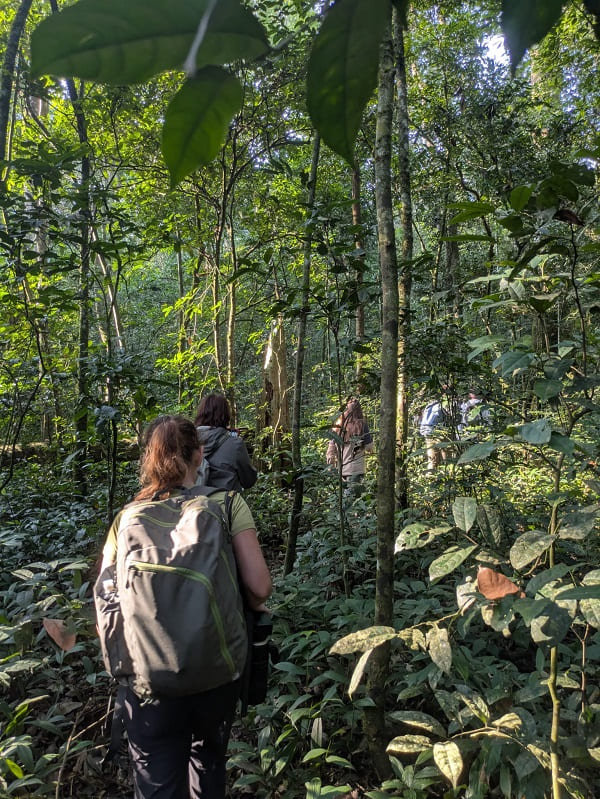
Uganda’s terrain in Bwindi tends to be steeper and more demanding. The park’s name comes from its dense, tangled forest, and rain falls often, even during the dry season, which can leave trails muddy and slow going. Treks here reward physical preparation and a reasonable tolerance for a harder hike. Our gorilla trekking difficulty guide covers what to expect physically in more detail.
Rwanda’s Volcanoes National Park offers generally flatter, easier terrain by comparison. Trekking still involves real hiking at altitude, since you’re moving through volcanic foothills, but most visitors find it less punishing than Bwindi’s forest trails. If trek difficulty worries you, Rwanda offers the gentler option.
Accessibility and Travel Time
Rwanda wins clearly on accessibility. Volcanoes National Park sits just a few hours from Kigali International Airport, which makes same-day arrival, trekking, and departure possible if your schedule is tight. Kigali also connects well to other destinations across East Africa, which helps if you’re combining gorilla trekking with other travel or business.
Uganda requires more travel time to reach Bwindi, whether you fly into Entebbe or route through Kigali, which shortens the drive on the Uganda side. Uganda’s infrastructure has improved steadily but still lags behind Rwanda’s road network and airport connections. If you have limited time and want minimal travel days, Rwanda is the more convenient choice.
Accommodation and Infrastructure
Uganda offers a wider spread of lodging, from budget campsites and community lodges to high-end luxury properties. This range makes Uganda a strong fit for travelers on any budget, not just those chasing the lowest possible cost. Browse our Bwindi lodges to see the full range.
Rwanda has built out excellent infrastructure to support higher-end tourism, and it has become one of Africa’s leading destinations for meetings, incentives, conferences, and events. This makes Rwanda a natural fit for business travelers who want to combine gorilla trekking with a conference trip, or for travelers who prioritize polish and convenience over saving money. See our Rwanda lodges for options near Volcanoes National Park.
Wildlife and Experiences Beyond Gorillas
Uganda offers more variety outside of gorilla trekking. The country combines gorillas with tree-climbing lions in Ishasha, chimpanzee tracking in Kibale Forest, and dense wildlife viewing in Murchison Falls National Park, alongside lakes, rivers, and varied landscapes. Travelers who want to build a full multi-park safari around their gorilla trek get more options in Uganda.
Rwanda pairs gorilla trekking with golden monkey tracking in the same Volcanoes National Park, which adds a second primate experience without leaving the park. Rwanda’s offering is more concentrated, which suits travelers who want an efficient trip rather than a longer multi-stop safari.
Which Country Fits Your Budget
Choose Uganda if permit cost drives your decision. At $800 per person, Uganda’s permit costs roughly half of Rwanda’s, and the country offers accommodation at every price point to match. A group trip, a longer multi-park safari, or any budget-conscious plan generally works out cheaper in Uganda. Our full gorilla safari cost breakdown covers every expense you’ll face beyond the permit.
Choose Rwanda if you’re prioritizing convenience and comfort over cost. Shorter drive times, stronger infrastructure, and easier terrain all come at a higher price, but that price buys you a smoother, less physically demanding trip.
Which Country Fits Your Timeline
If you only have a day or two to spare, Rwanda makes more sense. The short drive from Kigali means you can fly in, trek, and fly out with minimal travel days lost. Uganda works better if you have more time to spend, since the longer drive to Bwindi pays off with more parks and activities within reach once you’re there.
Which Country Fits Your Fitness Level
Rwanda’s flatter terrain suits travelers who want an easier physical experience or who are trekking with older or less fit members of their group. Uganda’s steeper, muddier trails in Bwindi suit travelers who don’t mind a harder hike and want the option to choose a more challenging trek if they’re up for it.
Both countries offer sedan chairs or stretchers carried by porters for travelers with mobility challenges, so neither destination rules out trekking entirely for less mobile visitors. Tell your tour operator in advance if this applies to you, regardless of which country you choose.
Packing Differences Between the Two
Your core packing list stays largely the same for both countries: waterproof hiking boots, a rain jacket, warm long-sleeved clothes, garden gloves, insect repellent, sunscreen, and plenty of drinking water. Bwindi’s muddier terrain in Uganda makes waterproof boots and a walking stick even more important, while Rwanda’s easier trails still call for the same core gear, just with slightly less emphasis on heavy-duty waterproofing.
Making the Final Call
Neither country offers a wrong choice. Both put you face to face with mountain gorillas for a full hour, and both experiences rank among the most memorable wildlife encounters available anywhere in Africa. The decision comes down to what matters most for your specific trip: budget, terrain, travel time, or the chance to combine gorillas with a wider safari.
If you’re weighing cost above everything else, Uganda’s $800 permit and wider accommodation range make it the stronger pick. If convenience, shorter travel time, and easier terrain matter more, Rwanda’s $1,500 permit buys a smoother trip. Many travelers also combine both countries in one itinerary, trekking in Uganda for the lower cost and adding a shorter Rwanda leg for the easy Kigali access, so you don’t necessarily have to choose just one. See our East Africa safari packages if a combined trip appeals to you.
Book Your Uganda or Rwanda Gorilla Trek Today
Whether you choose Uganda for its lower permit cost and wider range of parks, or Rwanda for its easy access and gentler terrain, both destinations deliver an unforgettable encounter with mountain gorillas. Contact us today to compare permit availability, build your itinerary, and book your gorilla trekking safari in Uganda or Rwanda.